
 EN
EN



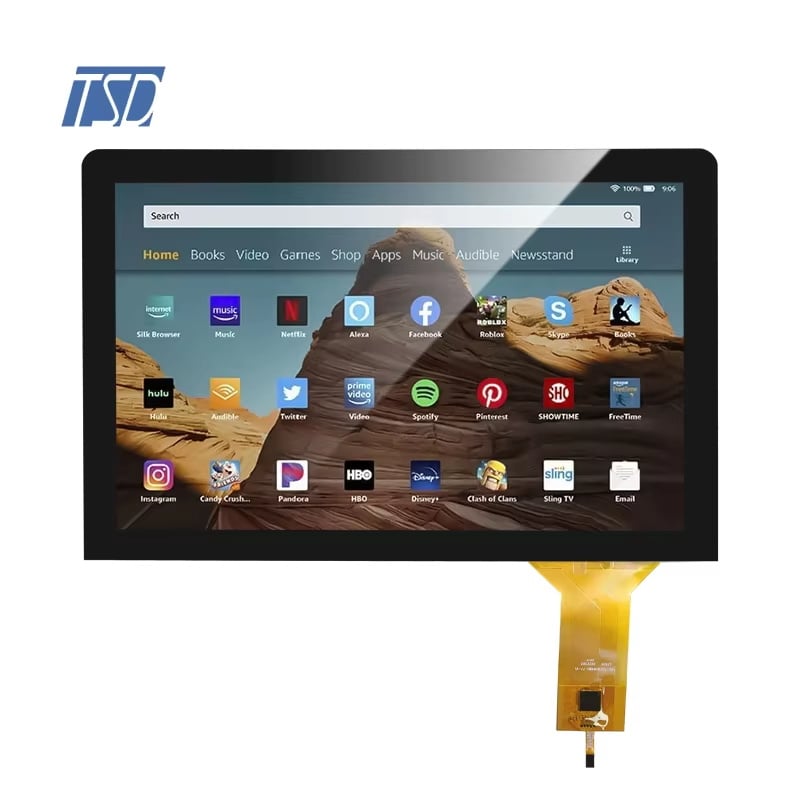
Aerospace instrumentation places some of the most demanding requirements on display technology in any industry. Every IPS LCD display module deployed in a cockpit, avionics bay, or ground support console must deliver exceptional optical performance, survive extreme environmental stress, and maintain flawless reliability over thousands of operating hours. Unlike consumer electronics, aerospace platforms offer no tolerance for visual degradation, flickering, or thermal failure at altitude.
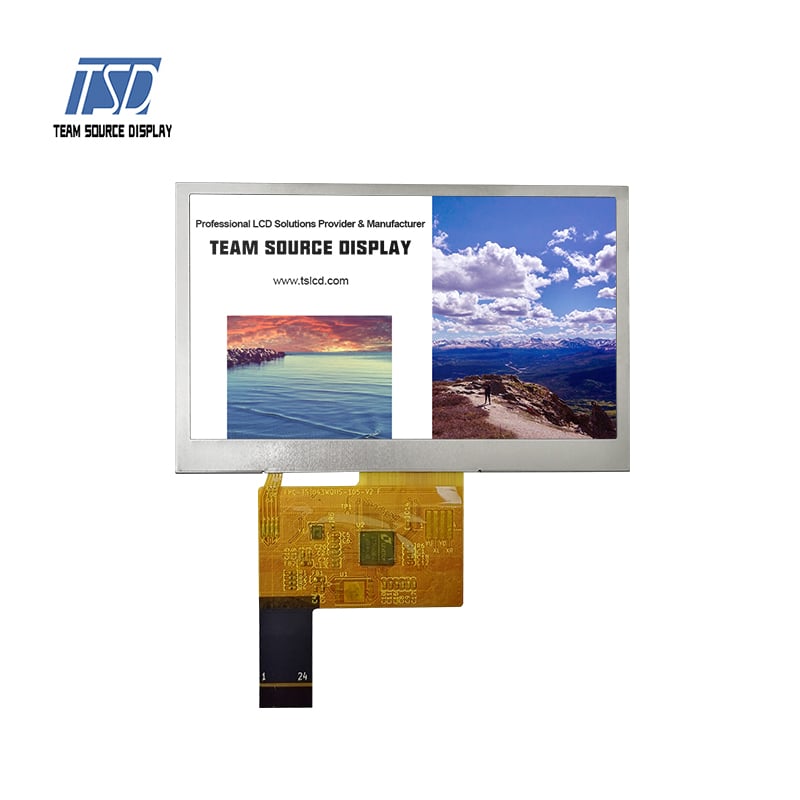
A custom IPS LCD display module engineered for aerospace applications goes far beyond standard off-the-shelf panels. Engineers specify every parameter — from viewing angle and luminance to interface protocol and shock resistance — to match the precise requirements of the target platform. This article examines what makes an IPS LCD display module suitable for aerospace instrumentation, how customization addresses mission-critical constraints, and which design considerations drive successful integration.
Why IPS Technology Suits Aerospace Displays
Wide Viewing Angles and Color Accuracy
An IPS LCD display module uses in-plane switching liquid crystal alignment, which produces consistent color and contrast across viewing angles that can reach 178 degrees horizontally and vertically. In an aircraft cockpit, pilots and co-pilots view instruments from slightly different angles simultaneously. A standard TN panel would show color shift and contrast inversion under those conditions, but an IPS LCD display module maintains accurate hue reproduction regardless of viewing position. This optical stability is not a luxury in aerospace — it is a safety-critical requirement.
Color accuracy also matters for data visualization. Attitude indicators, terrain maps, engine parameter displays, and navigation overlays use color coding to convey status at a glance. An IPS LCD display module with a wide color gamut and stable gamma response ensures that operators interpret color-coded alerts correctly under varying ambient light conditions, including direct sunlight at cruising altitude.
High Brightness and Optical Bonding
Aerospace cabins and flight decks expose displays to intense ambient illumination. A custom IPS LCD display module for these environments typically incorporates high-brightness backlighting, often exceeding 800 nits, combined with optical bonding between the display panel and the cover glass. Optical bonding eliminates the air gap that causes internal reflections, dramatically improving sunlight readability. When the IPS LCD display module is paired with an anti-reflective coating, the result is a panel that remains legible even under direct solar glare.
Customization Factors for Aerospace IPS Modules
Wide-Temperature Operation
Commercial and military aerospace platforms operate across a wide thermal envelope. An IPS LCD display module intended for avionics duty must function reliably from cold-soak conditions as low as minus 40 degrees Celsius through to elevated temperatures exceeding 85 degrees Celsius. Achieving this thermal range requires selecting liquid crystal formulations and backlight components rated for wide-temperature performance. The IPS LCD display module must also pass thermal shock and thermal cycling qualification to confirm that mechanical stress from repeated temperature excursions will not cause delamination or connector failure.
Wide-temperature IPS LCD display module designs often integrate a self-heating element or use LED backlight arrays with thermally stable drivers. These features ensure the display reaches normal operating viscosity quickly after cold-soak power-on, preventing the sluggish response that standard panels exhibit at very low temperatures. For aerospace instrumentation, fast cold-start display readiness is operationally significant.
Interface, Resolution, and Form Factor
Avionics line-replaceable units and embedded computing platforms use a variety of video interfaces. An IPS LCD display module for aerospace may be specified with SPI, MIPI DSI, RGB parallel, or LVDS interfaces depending on the host processor architecture. Resolution requirements vary by application: a dedicated engine monitoring display may operate at 480x272, while a primary flight display may demand full HD resolution. Custom IPS LCD display module designs allow engineers to match panel size, resolution, interface, and connector pinout precisely to the target board design, reducing integration complexity.
Form factor is equally important. Aerospace enclosures are tightly dimensioned, and a custom IPS LCD display module can be manufactured to non-standard sizes with specific bezel dimensions, mounting hole patterns, and depth constraints. This level of customization eliminates mechanical adaptation that could introduce vibration failure points in the final assembly. Every IPS LCD display module destined for aerospace integration benefits from early collaboration between display engineers and avionics mechanical designers.
Reliability and Qualification Standards
Vibration, Shock, and EMI Compliance
Aircraft experience continuous vibration from engines, aerodynamic buffeting, and landing events. An IPS LCD display module for aerospace instrumentation must pass vibration and mechanical shock testing aligned with standards such as DO-160 environmental conditions. The IPS LCD display module assembly — including the LCD cell, backlight unit, driver board, and connectors — must remain structurally intact and electrically functional after exposure to defined vibration profiles across multiple axes. Manufacturers of aerospace-grade IPS LCD display module products apply conformal coating to PCBs, use vibration-resistant connectors, and validate solder joint integrity through accelerated life testing.
Electromagnetic interference compliance is equally non-negotiable. An IPS LCD display module in an avionics rack must not radiate signals that interfere with navigation, communication, or flight control systems. Shielded cable assemblies, grounded metal frames, and EMI-filtered power inputs are standard design elements in a qualified IPS LCD display module for aerospace. These measures protect both the display and the surrounding avionics from conducted and radiated emissions.
Longevity and Supply Continuity
Aerospace programs often span decades. An IPS LCD display module selected for a platform in initial design may need to remain available as a spare part for twenty or more years. This supply continuity requirement drives aerospace procurement teams to work with display manufacturers capable of long-term production commitments. A custom IPS LCD display module with a documented product lifetime policy and a clear end-of-life notification process greatly reduces the risk of obsolescence-driven redesign mid-program. Selecting an IPS LCD display module supplier with aerospace program management experience is as important as the panel specification itself.
FAQ
What resolution is typical for an aerospace IPS LCD display module?
Resolution varies by application. Secondary status displays commonly use 480x272 or 800x480, while primary flight displays and multifunction displays often require 1280x800 or higher. A custom IPS LCD display module allows the resolution to be specified precisely for the intended avionics function rather than adapting to an off-the-shelf panel.
Can an IPS LCD display module pass DO-160 qualification?
Yes, an IPS LCD display module can be designed and tested to meet DO-160 environmental categories covering temperature, humidity, vibration, shock, and EMI. Meeting DO-160 requires deliberate design choices at the component, assembly, and system level. Working with a display manufacturer experienced in aerospace qualification significantly streamlines the certification process for the IPS LCD display module.
How does optical bonding improve an aerospace IPS LCD display module?
Optical bonding fills the air gap between the LCD panel and the cover glass with an optically clear adhesive. This process eliminates internal reflections that reduce contrast in high-ambient-light environments. The result is an IPS LCD display module that remains readable in direct sunlight conditions typical of cockpit environments, while also improving mechanical robustness against vibration and impact stress.