
 EN
EN



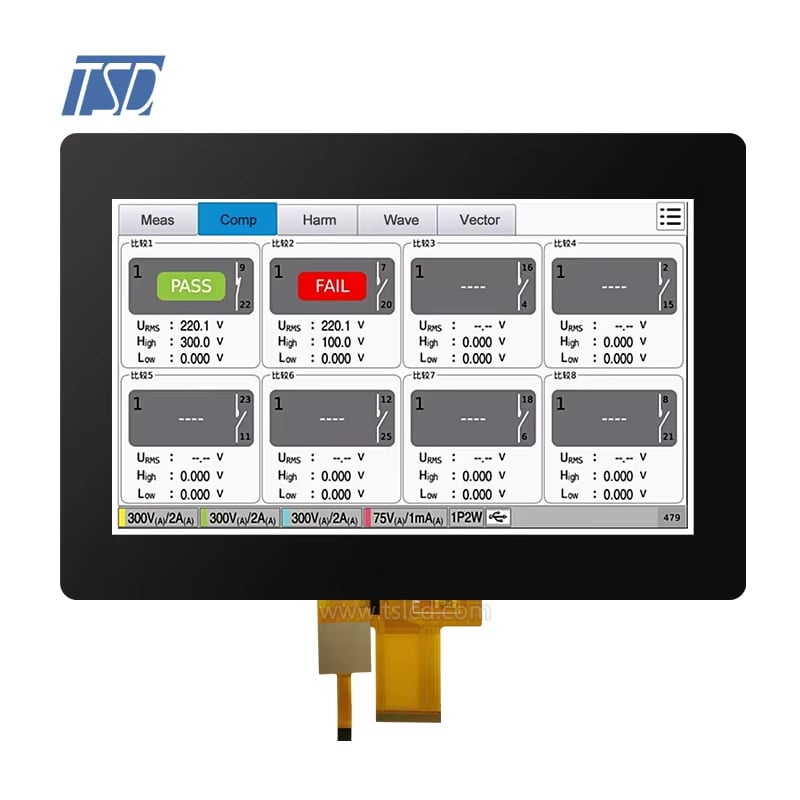
Smart metering and infrastructure applications demand visual components that deliver consistent, reliable readability under demanding field conditions. A custom LCD display answers this requirement directly by combining precise segment layouts, low power consumption, and robust construction tailored to each device's specific data output needs. Unlike off-the-shelf panels, a custom LCD display is engineered around the exact symbols, numerals, and icons that a meter or infrastructure controller must show, eliminating wasted screen space and reducing integration complexity.
Across electricity meters, gas meters, water flow controllers, and grid monitoring terminals, manufacturers increasingly specify a custom LCD display rather than adapting a generic module to fit an already-defined enclosure. This shift reflects a broader understanding that a purpose-built custom LCD display reduces firmware overhead, simplifies PCB routing, and lowers the total bill of materials over the product lifecycle. The sections below explain how a custom LCD display serves smart metering and infrastructure programs, what design factors matter most, and which supply considerations engineers should address early in the development process.
The Role of Custom LCD Display in Smart Metering
Data Visibility and Segment Accuracy
A smart electricity or water meter must display kilowatt-hours, flow rates, tariff codes, and status indicators simultaneously. A custom LCD display is laid out so that every digit, symbol, and annunciator occupies exactly the right position on the glass, matching the product's user interface specification from day one. When engineers use a standard custom LCD display footprint that was never intended for metering, they often add firmware workarounds to suppress irrelevant segments or rearrange icon placement, which introduces latency and consumes unnecessary controller resources. By contrast, a genuinely tailored custom LCD display maps each segment directly to a meaningful data point, making the firmware lighter and the calibration process faster.
Segment count flexibility is one of the most commercially valuable features a custom LCD display supplier can offer. A residential single-phase meter may need 6-digit numeric fields plus a handful of icons, while a three-phase industrial meter requires multi-row numeric fields, phase indicators, demand registers, and communication status symbols. A custom LCD display designed for the residential unit would be inadequate for the industrial device, and vice versa. Sourcing a dedicated custom LCD display for each product variant ensures that each meter reads clearly without forcing the operator to interpret irrelevant or absent segments.
Low Power Operation in Field-Deployed Meters
Battery-backed meters and remote data loggers operate for years without a mains power refresh. A custom LCD display using TN, HTN, or VA technology draws only microwatts when static content is held on screen, making it the preferred choice for energy-constrained infrastructure nodes. Engineers working on autonomous sensors or prepayment meters consistently prioritize a custom LCD display with a low-power backplane driver because it extends battery service intervals and reduces maintenance visits to remote installations. The ability to specify exact glass dimensions, electrode geometry, and fluid type during the custom LCD display design phase allows engineers to fine-tune current consumption to match the device power budget with precision that a catalogue panel simply cannot provide.
Infrastructure Applications Beyond Metering
Industrial Controllers and Panel Instruments
Infrastructure extends well beyond utility metering. Pump station controllers, valve actuators, substation relay panels, and environmental monitoring units all rely on a custom LCD display to present operational data to field technicians without color screens or high-brightness TFT modules that would increase cost and power draw unnecessarily. In these environments, a custom LCD display with wide operating temperature tolerance, typically minus 20 to plus 70 degrees Celsius or better, survives ambient conditions that degrade conventional consumer-grade panels. Specifying a VA-type custom LCD display for low-temperature outdoor installations, for instance, ensures adequate contrast even in winter field conditions where standard TN panels become sluggish and difficult to read.
Transportation and Vehicle Dashboard Integration
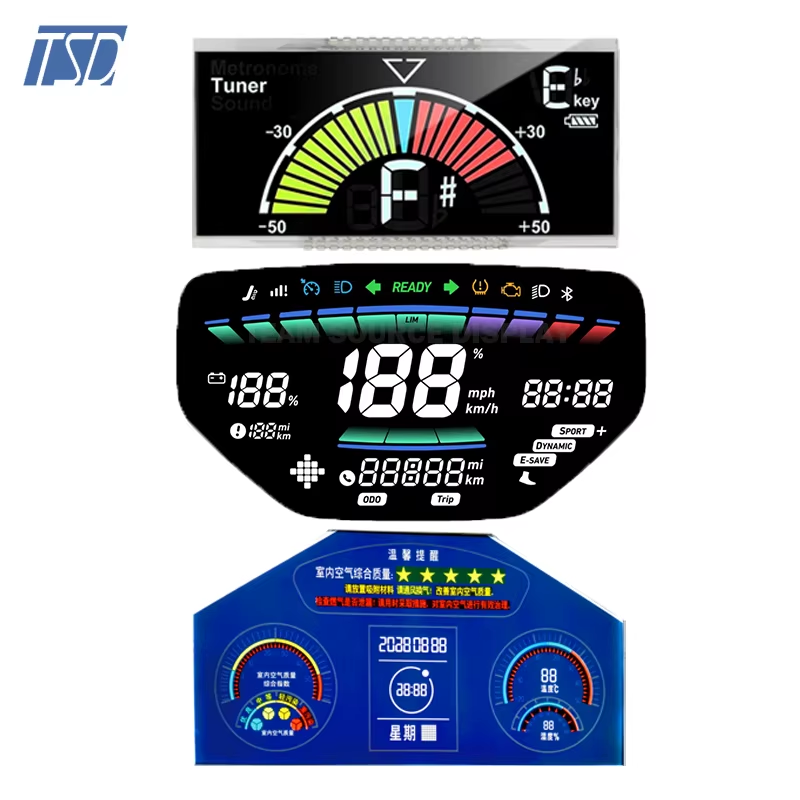
Segment-based custom LCD display modules are also widely used in speedometer clusters, fuel gauges, and instrument dashboard assemblies across commercial vehicles, motorcycles, and agricultural machinery. These applications share the same fundamental requirement as smart metering: the display must show a defined set of numerals and icons reliably across vibration, temperature swing, and UV exposure cycles. A custom LCD display engineered for a vehicle dashboard incorporates polarizer films rated for sunlight readability, electrode patterns matched to the vehicle designer's icon set, and connector pitches aligned with the PCB layout. Each of these choices is only possible when the supplier builds a custom LCD display to specification rather than supplying a standard module.
Key Supply Considerations for a Custom LCD Display Program
Tooling, Sampling, and Lead Time Planning
Bringing a custom LCD display into production requires glass mask tooling, which is a one-time investment that creates the electrode pattern unique to the product. Engineers should engage suppliers early to confirm tooling timelines, which typically range from three to six weeks depending on complexity, and to validate that the custom LCD display sample matches the optical and dimensional specification before volume orders are placed. Approving a custom LCD display sample through a structured review covering contrast ratio, viewing angle, operating temperature, and connector insertion force prevents costly rework later in the production ramp.
Volume forecasting and safety stock planning are equally important when managing a custom LCD display supply chain. Because the glass is produced to a unique electrode mask, a custom LCD display cannot be substituted with a catalogue part if stock runs out. Manufacturers running smart metering programs should establish a minimum buffer inventory of the custom LCD display and negotiate a blanket order arrangement with the supplier to protect against lead time spikes. Documenting the custom LCD display specification fully, including glass drawing, driver IC part number, polarizer orientation, and operating voltage, safeguards continuity if a second-source supplier qualification becomes necessary in the future.
Quality Verification and Long-Term Reliability
A custom LCD display intended for infrastructure must pass environmental reliability tests including thermal cycling, humidity exposure, and vibration endurance before shipment approval. Requesting IQC inspection data and lot traceability from the supplier ensures that each batch of custom LCD display units meets the qualified standard. For metering applications subject to regulatory certification, the custom LCD display must also comply with relevant dimensional and optical standards referenced in the meter approval documentation. Maintaining a clear audit trail for every custom LCD display batch simplifies recertification when design revisions or component updates are submitted to the certifying authority.
FAQ
What technology options are available for a custom LCD display in smart metering?
TN, HTN, STN, and VA technologies are all available for a custom LCD display in metering. TN and HTN suit standard indoor temperature ranges, STN offers improved multiplex performance for higher digit counts, and VA provides the best contrast for outdoor or low-temperature field deployments.
How long does it take to develop a new custom LCD display from specification to sample?
A typical custom LCD display development cycle from finalized specification to first physical sample takes approximately four to eight weeks, covering mask tooling, glass fabrication, polarizer lamination, and connector assembly. Faster timelines may be possible for simpler layouts with fewer segments.
Can a custom LCD display be used without a backlight in infrastructure panels?
Yes. Many infrastructure panels operate a custom LCD display in reflective mode without any backlight, relying on ambient light for readability. This approach further reduces power consumption and extends component life. A transflective custom LCD display is also available for applications that require both daylight readability and occasional LED backlit operation in low-light conditions.