
 EN
EN



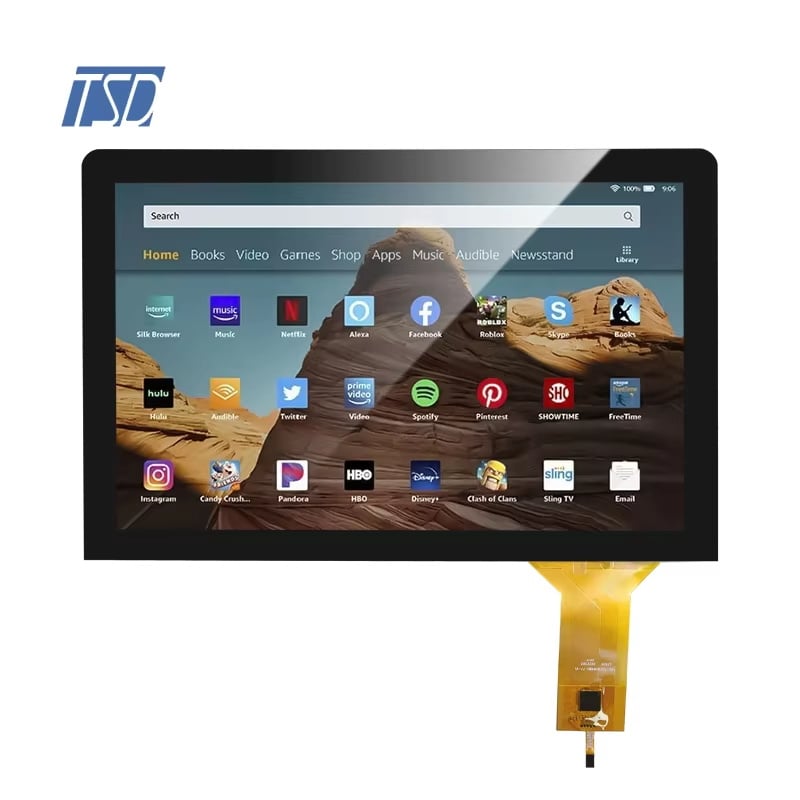
Selecting the right IPS LCD display module for a military grade terminal is a decision that carries significant operational consequences. Military environments impose extreme demands on every component, and the display is no exception. An IPS LCD display module used in such a terminal must deliver consistent visual performance under shock, vibration, wide temperature ranges, and challenging ambient lighting conditions. Understanding what separates a standard IPS LCD display module from one that meets military requirements is the essential starting point for any procurement team.

This article addresses the specific sourcing challenges procurement engineers and system integrators face when specifying an IPS LCD display module for defense and military terminal applications. From panel technology fundamentals to qualification requirements and supplier evaluation criteria, each factor outlined here is directly relevant to building a reliable, long-service display solution. Whether you are designing a vehicle-mounted command terminal, a portable field device, or a ruggedized workstation, the guidance below will help you source the right IPS LCD display module with confidence.
Why IPS Technology Matters for Military Display Applications
Wide Viewing Angle and Color Accuracy Under Operational Conditions
An IPS LCD display module is built around In-Plane Switching technology, which aligns liquid crystals horizontally to maintain consistent color reproduction and contrast across wide viewing angles. In military terminals, operators often view the screen from off-axis positions, whether mounted in a vehicle, shared between crew members, or installed in a tilted rack. A standard TN panel would show significant color shift under these conditions, but an IPS LCD display module maintains visual integrity at angles up to 178 degrees both horizontally and vertically. This characteristic is not a luxury in defense contexts — it is a functional requirement that directly affects operational accuracy.
Color accuracy is equally critical. When an IPS LCD display module is used to render maps, sensor overlays, or tactical data, the fidelity of color representation directly influences decision-making. IPS panels deliver sRGB coverage that far exceeds TN alternatives, making the IPS LCD display module the preferred choice wherever color-coded information is mission-relevant. Procurement teams should verify the color gamut specification on any IPS LCD display module under consideration and ensure it aligns with the software rendering pipeline used in the target terminal.
Readability in High-Ambient Light Environments
Military terminals are frequently deployed outdoors or near windows where sunlight creates strong ambient light interference. An IPS LCD display module intended for these environments must feature a high-brightness backlight, typically above 800 nits, combined with an optical bonding option that eliminates the air gap between the cover glass and the panel. Optical bonding on an IPS LCD display module reduces internal reflections and dramatically improves readability in direct sunlight. Procurement engineers should request brightness specifications, anti-reflection treatment options, and bonding compatibility data from any IPS LCD display module supplier being evaluated.
Key Technical Specifications to Evaluate When Sourcing
Resolution, Interface, and Panel Size Suitability
The right IPS LCD display module for a military terminal begins with matching physical and electrical specifications to the system architecture. A 15-inch IPS LCD display module with 1024x768 resolution and an LVDS interface, for example, suits embedded computing environments where legacy signal formats remain prevalent and screen real estate must balance detail with panel size constraints. When evaluating an IPS LCD display module, engineers should confirm whether the interface — LVDS, eDP, MIPI, or parallel RGB — is compatible with the host processor or graphics controller already selected for the terminal design.
Resolution selection for an IPS LCD display module in military applications must account for the density of information displayed. Tactical interfaces often present layered data simultaneously, and insufficient resolution on the IPS LCD display module can make critical details difficult to distinguish. At the same time, excessively high resolution on an IPS LCD display module can strain embedded GPU resources and increase power consumption, which is a real constraint in battery-operated field terminals. Balancing these factors during IPS LCD display module specification is one of the most important engineering decisions in the sourcing process.
Temperature Range, Shock Resistance, and EMI Compliance
A military-grade IPS LCD display module must operate reliably across a wide temperature range, typically from -30°C to +85°C for storage and -20°C to +70°C for operation. Standard commercial IPS LCD display module products are rated for much narrower ranges and will fail or degrade in extreme field conditions. When sourcing, always request the full thermal characterization data for each IPS LCD display module candidate, including startup behavior at low temperatures and luminance stability at high temperatures.
Shock and vibration tolerance is another non-negotiable attribute. An IPS LCD display module deployed in a vehicle-mounted or airborne terminal will be exposed to mechanical stress that can damage fragile backlight assemblies or loosen connector contacts. Mil-STD-810 compliance is the standard benchmark for qualifying an IPS LCD display module in these environments. Electromagnetic interference compatibility is equally important — an IPS LCD display module installed in a system operating near radio equipment must not generate or be susceptible to EMI that degrades either the display or the communication systems around it.
Supplier Evaluation and Qualification for Military Projects
Long-Term Availability and Product Lifecycle Commitments
Military terminal programs often span ten to twenty years from initial design to end of service. Sourcing an IPS LCD display module for such a program requires more than finding a technically suitable panel — it demands a supplier capable of supporting long production runs, providing advance notice of end-of-life transitions, and offering a last-time-buy option when an IPS LCD display module model is discontinued. Procurement teams should negotiate lifecycle commitment terms directly with IPS LCD display module suppliers before finalizing any design-in decision. A technically perfect IPS LCD display module that becomes unavailable three years into a ten-year program creates serious supply chain risk.
Qualification Documentation and Customization Capability
A credible IPS LCD display module supplier for military applications should be able to provide full qualification documentation, including test reports for temperature cycling, vibration, humidity, and EMI. Custom mechanical or optical modifications — such as adding an optical bonding layer, applying an anti-glare or anti-reflective coating, or integrating a touch sensor — should be available from the same IPS LCD display module source to simplify the supply chain. Suppliers experienced with IPS LCD display module customization for defense applications will understand the documentation and traceability requirements that military procurement processes demand.
FAQ
What makes an IPS LCD display module better than a TN panel for military terminals?
An IPS LCD display module provides wider viewing angles, better color accuracy, and greater contrast consistency compared to TN panels. These attributes are critical in military terminals where operators view screens from varied positions and rely on accurate color rendering for tactical data.
What interface types are commonly used with an IPS LCD display module in embedded military systems?
LVDS is widely used in embedded military computing due to its compatibility with legacy processors and its noise-resistant signal transmission. An IPS LCD display module with an LVDS interface integrates reliably into rugged computing platforms, though eDP and MIPI are increasingly specified for newer designs.
How should procurement teams verify the ruggedness of an IPS LCD display module before sourcing?
Procurement teams should request Mil-STD-810 test reports, thermal characterization data, and operational temperature range specifications directly from the IPS LCD display module supplier. Independent qualification testing may also be conducted as part of the program's formal component approval process.