
 EN
EN



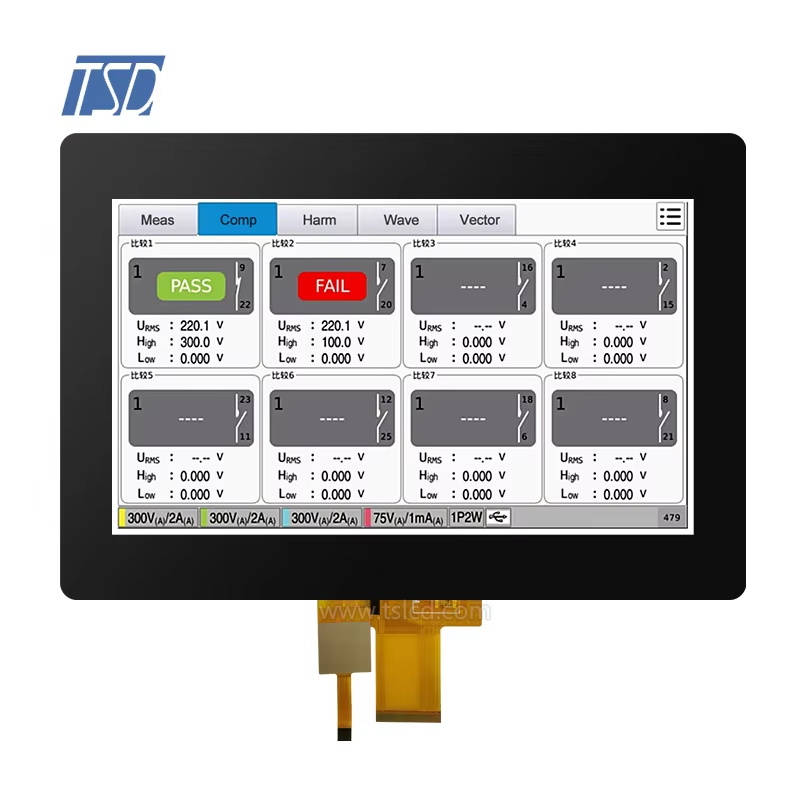
Wearable healthcare monitors demand more than standard off-the-shelf screens can reliably deliver. A custom LCD solution allows device engineers to align display performance, size, and interface specifications precisely with the clinical and ergonomic requirements of each wearable product. When a monitor must track heart rate, blood oxygen, or glucose levels on a patient's wrist or chest, every visual detail and power parameter matters deeply. The custom LCD approach transforms a generic component into a purpose-built element of a medical-grade wearable system, ensuring that the display serves the device's mission rather than limiting it.

This article explores how custom LCD production works for wearable healthcare monitors, what engineering decisions drive display specifications, and why choosing a custom LCD over a standard panel can define the difference between a market-ready medical device and one that underperforms in real-world clinical use. From resolution and brightness to power efficiency and touch integration, custom LCD development covers every layer of the display stack. Understanding this process helps hardware teams make informed decisions early in product development, reducing redesign cycles and accelerating regulatory-ready builds.
Why Standard Panels Fall Short in Medical Wearables
The Mismatch Between Generic Displays and Clinical Needs
Standard display panels are designed to satisfy broad consumer electronics requirements, not the nuanced demands of wearable healthcare monitors. A custom LCD resolves this mismatch by allowing engineers to specify exact dimensions, resolution, brightness levels, and viewing angle performance. For instance, a wrist-worn cardiac monitor may require a custom LCD with a narrow bezel, a specific aspect ratio, and outdoor-readable brightness levels that generic panels simply do not offer at the right form factor. Medical wearables also require long-term supply stability, which a custom LCD program delivers through dedicated production agreements and controlled component sourcing.
Power Consumption and Always-On Display Requirements
Healthcare wearables often operate continuously for extended periods, monitoring patient vitals without interruption. Power consumption is therefore a critical constraint, and a custom LCD allows engineering teams to tune backlight configurations, duty cycles, and low-power display modes to extend battery life without sacrificing readability. Standard panels rarely offer the granular power management options that medical device teams require. With a custom LCD, the backlight driver, display controller, and refresh logic can all be co-optimized for the specific power budget of the wearable healthcare monitor, resulting in devices that last longer between charges while maintaining clinical accuracy in visual output.
Key Engineering Decisions in Custom LCD Production
Resolution, Size, and Interface Selection
Selecting the right resolution and physical size is the foundation of any custom LCD project for wearable healthcare monitors. A 1.45-inch custom LCD with 172x320 resolution, for example, offers sharp text and icon rendering within a compact form factor ideal for smartwatch-style health monitors. The interface type also matters: SPI and RGB interfaces serve different controller architectures, and choosing the wrong one adds latency or complexity to the firmware stack. A custom LCD program allows teams to specify the driver IC, such as the ST7789V3, ensuring that the display integrates cleanly with the host processor without requiring additional signal conversion hardware. IPS panel technology in a custom LCD further ensures consistent color accuracy across wide viewing angles, which is essential when patients or clinicians glance at a monitor from various positions.
Touch Integration and Environmental Durability
Many wearable healthcare monitors incorporate touch interaction for data navigation, alarm acknowledgment, or parameter adjustments. A custom LCD module can integrate a capacitive touch layer directly bonded to the display glass, reducing thickness and improving optical clarity compared to air-gap assemblies. Optical bonding in a custom LCD also eliminates fogging and improves contrast in bright ambient light, which is critical for outdoor or high-bay clinical environments. Environmental durability is another area where custom LCD production adds measurable value. Medical wearables face perspiration, cleaning agents, and temperature variation, so a custom LCD can be specified with enhanced sealing, anti-reflective coatings, and tempered cover glass to withstand these conditions reliably throughout the device's intended service life.
Production Planning and Quality Assurance for Medical Custom LCD
Regulatory Alignment and Documentation
Medical device regulations require comprehensive documentation of every component, including display assemblies. A custom LCD supplier with medical-market experience provides the traceability records, material declarations, and process control documentation that regulatory submissions demand. ISO 13485-aligned manufacturing practices ensure that each custom LCD unit produced meets the same quality standard as the approved sample used during design validation. This consistency is not achievable with commodity panels sourced from open markets, where batch variation can introduce performance inconsistencies that invalidate prior testing. Choosing a custom LCD partner who understands regulatory documentation reduces audit risk and accelerates time-to-market for certified wearable healthcare monitors.
Prototyping, Validation, and Volume Scaling
Custom LCD production for wearable healthcare monitors follows a structured development path that begins with specification agreement and prototype sampling. Engineering samples allow hardware teams to validate fit, optical performance, and electrical integration before committing to tooling and volume production. A well-managed custom LCD program includes environmental stress testing, burn-in screening, and outgoing quality control checkpoints at each production stage. As the wearable product scales from pilot to mass production, the custom LCD supplier adjusts yield management and packaging to maintain consistency across large order volumes. This scalability is a core advantage of structured custom LCD production compared to adapting standard panels, where supply chain gaps can disrupt device manufacturing at critical commercial milestones.
FAQ
What makes a custom LCD better than a standard display for wearable healthcare monitors?
A custom LCD is engineered to match the exact size, resolution, interface, and power requirements of a specific wearable device. This precision alignment improves display performance, reduces integration complexity, and ensures the custom LCD meets the long-term supply and quality standards required for medical-grade products. Standard panels cannot consistently deliver these tailored characteristics.
How long does it take to develop a custom LCD for a wearable healthcare product?
Development timelines for a custom LCD typically range from eight to twenty weeks, depending on the complexity of the specification, tooling requirements, and the supplier's production capacity. Simple customizations of an existing custom LCD platform can be completed faster, while fully new designs with unique dimensions or bonded touch layers require more engineering and validation time before production samples are approved.
Can a custom LCD meet medical device regulatory requirements?
Yes, a custom LCD produced under ISO 13485-aligned quality management systems can fully support medical device regulatory submissions. Suppliers offering proper material traceability, process documentation, and inspection records make the custom LCD component a compliant and auditable part of the device technical file. Working with an experienced custom LCD partner early in design ensures all documentation requirements are addressed before regulatory review begins.