
 EN
EN



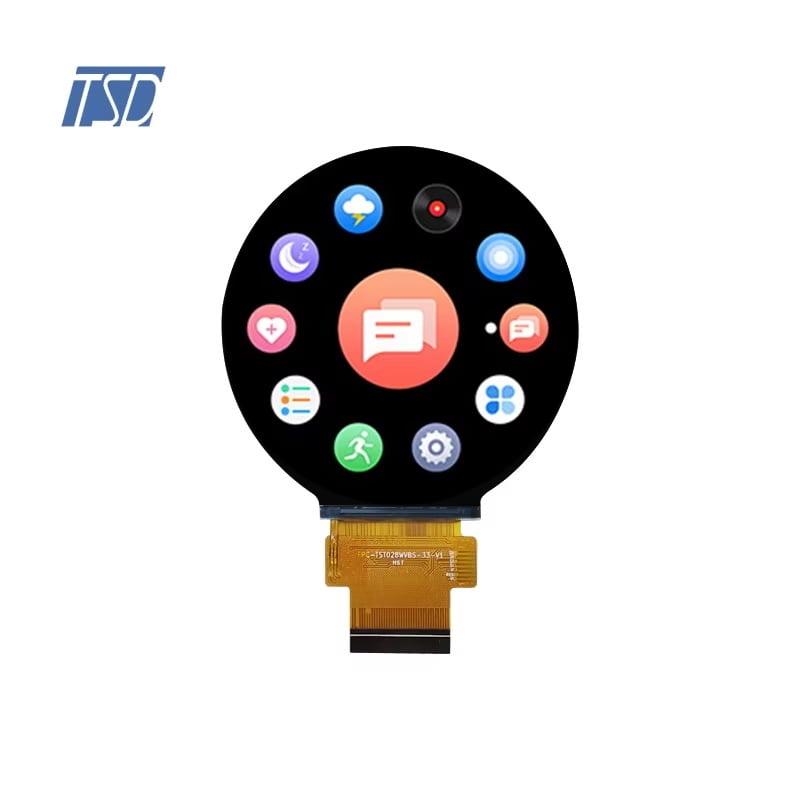
Modern vehicles are no longer just mechanical systems — they are rolling digital environments where drivers and passengers expect seamless interaction with navigation, media, climate control, and connectivity features. At the center of this transformation are IPS LCD display modules, the hardware foundation that makes rich, responsive, and visually accurate in-car interfaces possible. Understanding where and how IPS LCD display modules are applied reveals why they have become the preferred choice for automotive OEMs and Tier 1 suppliers worldwide.
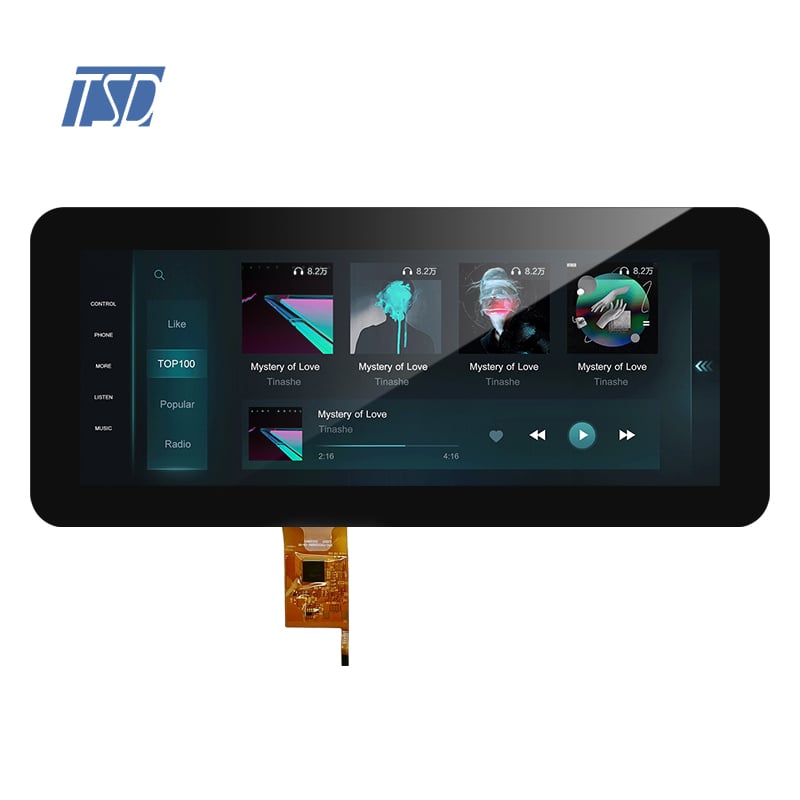
IPS LCD display modules bring a combination of wide viewing angles, accurate color reproduction, and stable performance across temperature extremes — all critical requirements in the automotive environment. As in-car infotainment systems grow more sophisticated, the demand for high-quality IPS LCD display modules continues to accelerate. This article explores the primary application areas, the technical advantages that make IPS LCD display modules so well suited to these scenarios, and the key considerations engineers and procurement teams must weigh when selecting IPS LCD display modules for automotive integration.
Core Application Areas for IPS LCD Display Modules
Central Infotainment Screens
The central infotainment screen is the most visible application for IPS LCD display modules in any modern vehicle. Positioned at the heart of the dashboard, these IPS LCD display modules serve as the primary interface for navigation, audio, phone connectivity, and vehicle settings. Drivers interact with IPS LCD display modules in this position constantly, making display clarity and touch responsiveness non-negotiable. High-resolution IPS LCD display modules — such as those offering 1920x720 pixel layouts in a 12.3-inch form factor — provide the sharpness needed to render detailed maps and crisp menu graphics without distortion.
The wide viewing angle characteristic of IPS LCD display modules ensures that both the driver and front passenger can read the screen clearly without color shift or brightness degradation. This is a direct advantage over older TN-type panels. As automakers push toward larger, edge-to-edge dashboard displays, IPS LCD display modules are scaling up in size and resolution while maintaining the durability automotive environments demand.
Digital Instrument Clusters
Beyond the central console, IPS LCD display modules are increasingly replacing analog gauges in digital instrument clusters. These IPS LCD display modules display speed, fuel level, navigation prompts, driver assistance alerts, and engine data in a fully configurable format. Because instrument clusters must be readable at a glance — often under direct sunlight or at sharp viewing angles — IPS LCD display modules with high brightness ratings and anti-glare surface treatments are standard in this application. Engineers specify IPS LCD display modules for clusters because they offer consistent luminance across the full screen area, eliminating the hot-spot effect common in inferior panel technologies.
Technical Advantages Driving Automotive Adoption
Wide Viewing Angles and Color Accuracy
IPS LCD display modules are engineered with in-plane switching technology, which aligns liquid crystal molecules horizontally. This design gives IPS LCD display modules viewing angles of up to 178 degrees both horizontally and vertically. In a vehicle cabin where multiple occupants view the same screen from different positions, IPS LCD display modules deliver a consistent visual experience without the washed-out or color-inverted appearance seen on lower-grade panels. Color gamut coverage in quality IPS LCD display modules typically reaches 70% to 90% of the NTSC standard, producing vivid, true-to-life visuals for mapping applications, media playback, and UI themes.
Temperature Stability and Durability
Automotive-grade IPS LCD display modules must withstand operating temperatures ranging from -40°C to +85°C, as vehicle interiors can reach extreme heat in summer and severe cold in winter. Quality IPS LCD display modules designed for automotive use incorporate wide-temperature liquid crystal compounds and robust backlight units that maintain consistent brightness across this range. The mechanical construction of automotive IPS LCD display modules also accounts for vibration, humidity, and UV exposure — all of which degrade lower-quality panels over time. Procurement teams should always verify that the IPS LCD display modules under consideration carry relevant automotive qualification standards.
Touch Integration with PCAP Technology
Modern IPS LCD display modules for in-car infotainment are almost universally paired with projected capacitive touch panels, commonly referred to as PCAP touch. IPS LCD display modules with integrated PCAP touch layers provide multi-touch gesture support, including pinch-to-zoom for maps and swipe navigation for media libraries. The optical bonding used in premium IPS LCD display modules eliminates the air gap between the touch glass and the display panel, reducing internal reflections and improving readability under strong ambient light. This bonded construction also makes IPS LCD display modules more resistant to condensation and vibration-induced delamination.
Selection Criteria for In-Car IPS LCD Display Modules
Resolution and Aspect Ratio
Selecting the right IPS LCD display modules for a specific vehicle platform requires careful evaluation of resolution and aspect ratio. Wide-format IPS LCD display modules with aspect ratios such as 32:9 or 16:6 are commonly specified for instrument clusters that span the full width of the dashboard. IPS LCD display modules with 1920x720 resolution deliver high pixel density across elongated formats, ensuring sharp text rendering for navigation labels and data readouts. Engineers integrating IPS LCD display modules into new platforms should confirm that the display resolution aligns with the GPU capabilities of the head unit processor to avoid rendering bottlenecks.
Interface Compatibility and Signal Input
IPS LCD display modules used in automotive infotainment must support the signal interfaces available in the vehicle's head unit architecture. HDMI, LVDS, MIPI DSI, and eDP are the most common interface standards found in automotive IPS LCD display modules. HDMI-compatible IPS LCD display modules offer straightforward integration with Android-based head units and development platforms, making them popular for aftermarket and prototyping applications. When evaluating IPS LCD display modules, engineering teams must also confirm signal voltage levels, cable length tolerances, and EMC compliance to ensure reliable operation within the vehicle's electromagnetic environment.
FAQ
What makes IPS LCD display modules better than TN panels for automotive use?
IPS LCD display modules offer significantly wider viewing angles and more accurate color reproduction compared to TN panels. In a vehicle cabin where screens must be readable from multiple seating positions and under varying light conditions, IPS LCD display modules consistently outperform TN alternatives without color shift or brightness loss at off-axis angles.
Can IPS LCD display modules handle the heat inside a parked car?
Automotive-grade IPS LCD display modules are specifically engineered to operate reliably across a wide temperature range, typically from -40°C to +85°C. These IPS LCD display modules use high-temperature liquid crystal formulas and heat-resistant backlight components to maintain performance even when a vehicle has been parked under direct sunlight for extended periods.
Are IPS LCD display modules with PCAP touch suitable for gloved operation?
Standard PCAP-based IPS LCD display modules are optimized for bare-finger touch input, which is the primary use case in most infotainment applications. However, some IPS LCD display modules are available with enhanced sensitivity firmware that allows gloved-hand operation, a feature increasingly relevant for commercial vehicles and fleet applications operating in cold climates.